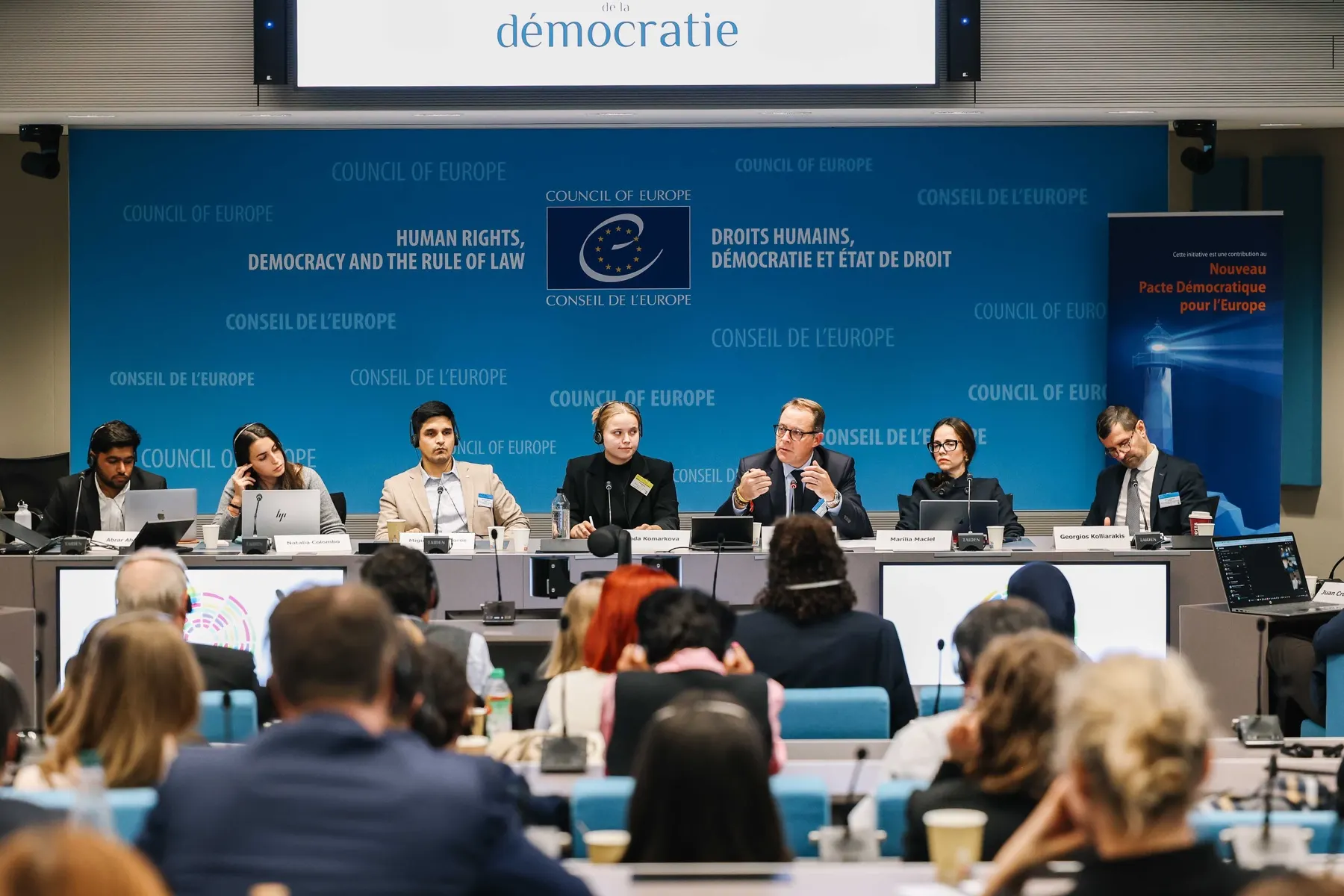
Watch on YouTube: Abrar Ahmed: You don't need English to understand AI.
From pre-selection to the Strasbourg programme
The World Forum for Democracy organising team told WANG that Urdu Ai had been pre-selected from more than 480 applications for the 2026 edition. The Council of Europe's public programme subsequently featured Urdu Ai as one of three initiatives in its AI and Democracy session.
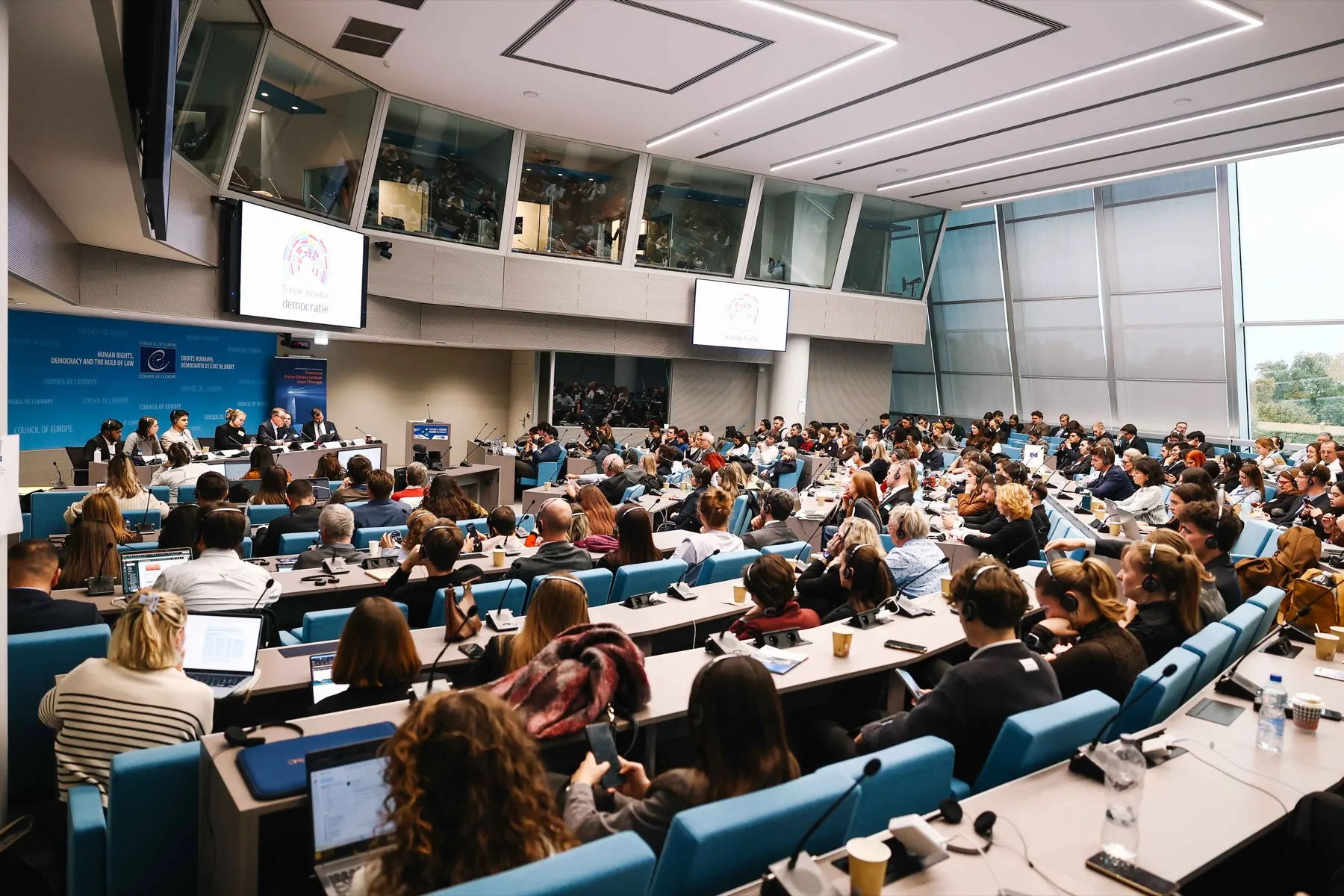
Abrar Ahmed, Youth Engagement Coordinator at the Welfare Association for New Generation (WANG), presented the initiative at the Palais de l'Europe in Strasbourg on 3 November. The Council of Europe reported that 21 initiatives were presented across the forum, which drew 1,400 participants from 60 countries.
What Urdu Ai brought to the discussion
The programme listed the project as Urdu AI: Building Democratic Resilience Through AI Literacy in Pakistan. It sat alongside Factchequeado, which helps Spanish-speaking communities find reliable civic information, and TrIAje, an AI-assisted legal guidance tool for civil society organisations in Peru.
Urdu Ai brought a practical example from Pakistan: teach AI in the language people use, and give them a chance to try it with someone they know. Urdu-language resources make it possible to start online. Local Urdu Ai Dost facilitators bring that learning into schools, vocational settings, and community spaces.
Why language matters for responsible AI use
Being able to ask an AI tool a question is only the first step. People also need to know when to check an answer, where to look for a reliable source, and what information they should not share. Those habits are easier to practise when the explanation is in a language learners can use confidently.
For example, someone who encounters an AI-generated image or a confident summary of a public issue should be able to ask where it came from and check it against other sources. That is why we see AI literacy as part of public life, not just a way to get work done faster.
Common questions
How was Urdu Ai recognised at the forum?
Urdu Ai was pre-selected from more than 480 applications and then featured in the Council of Europe's AI and Democracy session. It was one of 21 initiatives presented across the forum. This programme recognition is separate from the Democracy Innovation Award.
Who presented Urdu Ai at the World Forum for Democracy?
Abrar Ahmed, Youth Engagement Coordinator at WANG, presented Urdu Ai at the AI and Democracy session in Strasbourg on 3 November 2026.
Where can I find the session programme and recording?
The Council of Europe's official session page lists the participating initiatives and provides the session recording.
Partner with Urdu Ai
Urdu Ai is building practical AI literacy pathways through Urdu-first learning, Dost facilitators, institutional partners, and community access across Pakistan.