Short answer
A strong community AI education program does more than introduce new tools. It helps people understand AI in their own language, practice in trusted spaces, apply it to real work, and continue learning after the first session ends.
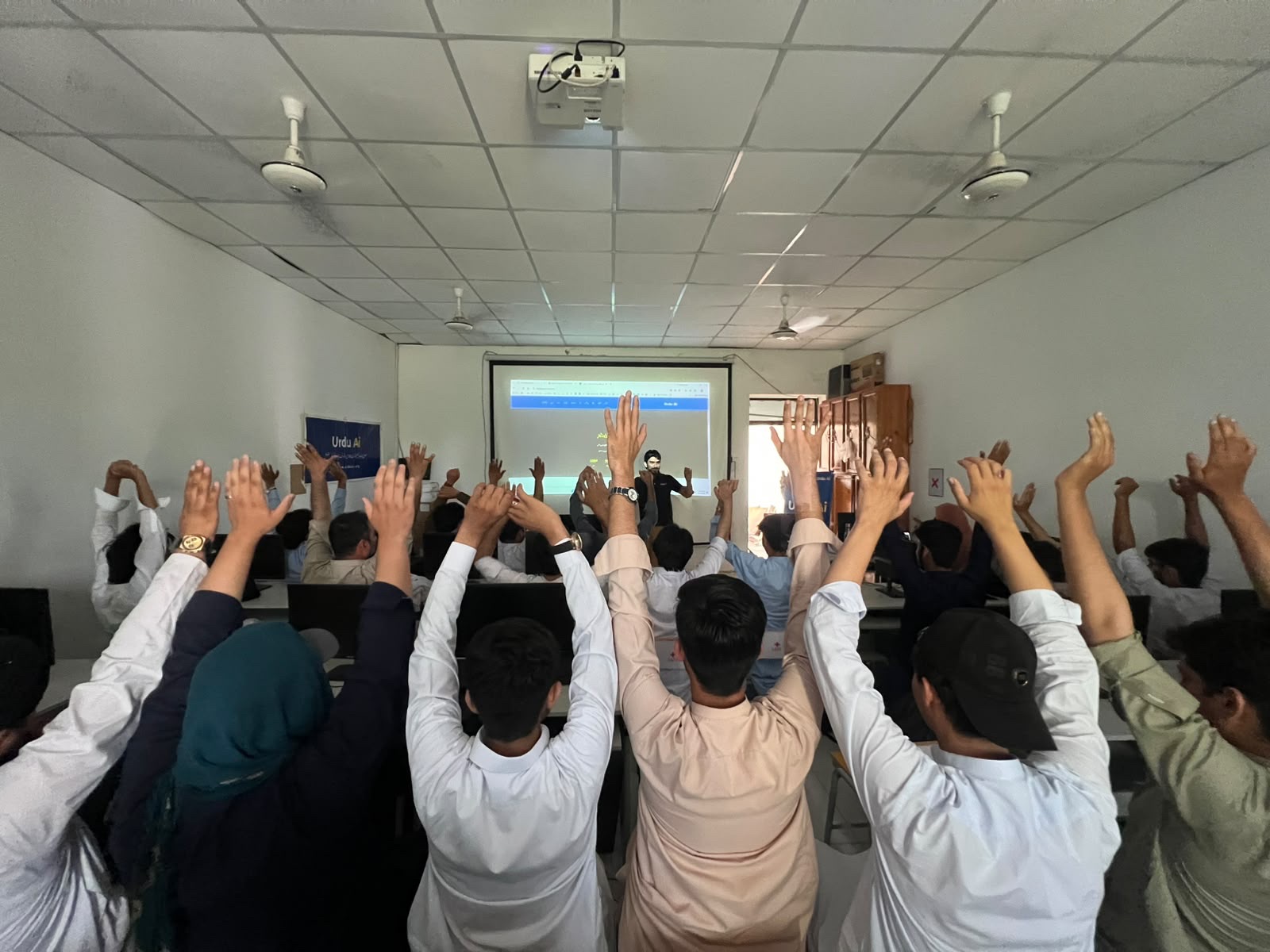
Urdu Ai offers a useful model because it combines Urdu-first content, local Dost facilitators, women-friendly access, institutional MoUs, learner stories, media visibility, and public impact records across Pakistan.
Start with the real barrier
Many AI programs begin with tools. Community AI education should begin with the learner. Can the learner understand the explanation? Can they try the tool on a phone? Can they ask questions without feeling embarrassed? Can they connect AI to school, work, farming, freelancing, teaching, or small business?
For Pakistan, language is central. If AI education is only available in English, it will miss many of the people who could benefit most. Urdu-first learning does not lower the standard. It raises access.
Use trusted local people
Community learning depends on trust. Urdu Ai's Dost model puts local facilitators at the center. Dosts are educators, organizers, technologists, advocates, and community leaders who can explain AI in ways that match local needs.
This matters because people often learn best from someone who understands their context. A district facilitator can translate a general AI idea into a classroom example, a legal research workflow, a design task, a farm question, or a small business use case.
Make the learning practical
An effective AI education program should not stop at awareness. Learners need to practice prompts, compare outputs, understand mistakes, and connect the tools to daily work.
Urdu Ai field stories show learners using AI for study notes, lesson planning, graphic design, client work, software support, document summaries, legal research, public awareness content, and productivity. These examples make AI less abstract and more useful.
Build women-friendly and youth-friendly pathways
If a community AI program does not intentionally reach women and young people, access gaps can grow. Urdu Ai reports 51% women participation across reported learning activity, showing that women can be central to AI education when training is designed around trust, language, and local access.
Women-focused institutions, female facilitators, safe learning spaces, and practical examples for education, livelihood, confidence, and family support can make AI learning more relevant and more sustainable.
Use institutions to make delivery repeatable
One-off workshops can create excitement, but repeatable learning needs partners. Institutional MoUs help Urdu Ai work through universities, women-focused institutes, technical and vocational centers, and regional education partners.
For donors and education partners, this is important. MoUs create trusted entry points, help organize cohorts, support faculty engagement, and make it easier to continue learning through places where students and communities already gather.
Show impact clearly and carefully
Good community AI programs should explain their impact without exaggeration. Urdu Ai's public impact site separates people trained, training workshops, women participation, district coverage, Dost profiles, stories, and media coverage.
This kind of clarity helps potential donors, CSR teams, foundations, and public-sector partners understand both the scale of the work and the basis behind the numbers. It also respects learners by presenting their stories as real accounts, not inflated claims.
What donors should look for
A donor looking for an impactful community AI education program should ask practical questions: Does the program reach people in a local language? Are women and youth included? Are facilitators trusted? Are institutions involved? Are learners using AI beyond the workshop? Are numbers explained clearly? Are there public stories, photos, maps, or partner references?
Urdu Ai is building across those areas: public Urdu learning, Dost facilitators, institutional MoUs, learner outcomes, district records, WANG's community base, WALI's rural innovation work, and AVPN-linked regional recognition through the AI Opportunity Fund: Asia-Pacific.
Common questions
What is a community AI education program?
A community AI education program helps people understand and use artificial intelligence through local language, trusted facilitators, practical examples, and learning spaces that communities can access.
What should donors look for in an AI education program?
Donors should look for local language access, inclusive participation, trusted facilitators, practical skills, institutional partnerships, learner stories, and clear explanations of reported numbers.
How does Urdu Ai make AI education practical?
Urdu Ai uses simple Urdu explanations, local Dost facilitators, public tutorials, institutional MoUs, and real use cases for study, teaching, freelancing, design, small business, farming, and daily work.
Partner with Urdu Ai
Urdu Ai is building practical AI literacy pathways through Urdu-first learning, Dost facilitators, institutional partners, and community access across Pakistan.